Where to visit?
Geography: 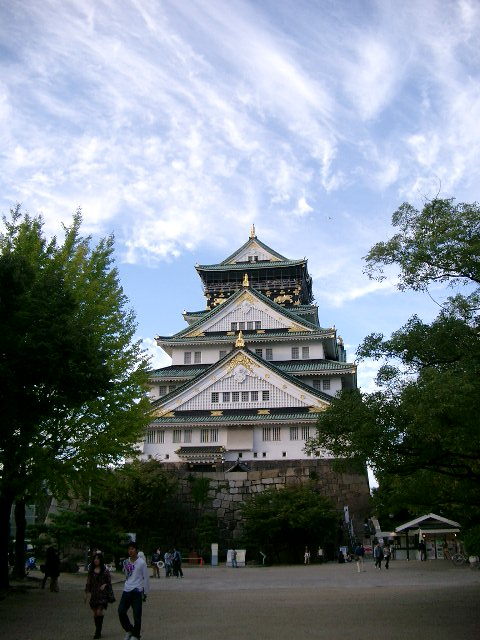
Osaka is a largely flat city, which makes it easy to explore on foot.
The only noticeably elevated area is around Osaka Castle, which is situated on a tableland.
The name Osaka is commonly said to come from “O-saka,” meaning “big slope.”
This elevated area around the castle is considered to be the origin of the name.
In the past, waterways played a crucial role in transporting goods such as rice.
Unlike Tokyo (formerly Edo, the seat of the Tokugawa shogunate), Osaka developed as a city governed largely by wealthy merchants from the 17th century onward. These merchants, rather than the Tokugawa government, built many of the city’s bridges.
In Japanese, a bridge is called hashi or -bashi, and even today, many districts in Osaka end with -bashi in their names.
Over time, many of the old canals were filled in and turned into roads, which now form an essential part of Osaka’s modern transportation network.
History: 
Osaka Bay once served as a major gateway for travel to and from overseas.
Along with Nara and Kyoto, Osaka was the capital of Japan on three occasions—although each period was relatively short.
Here, the word capital refers to the city where the Emperor resided.
During medieval times, while the shogun (the military and political leader) governed from Edo, the Emperor lived in Kyoto. As a result, Kyoto remained Japan’s capital for many centuries.
From the late 16th century onward, Osaka City flourished after Osaka Castle became an administrative center. Although Osaka Castle was destroyed in 1615 by the Tokugawa shogunate, it was later rebuilt, and the city continued to prosper as Japan’s leading commercial hub.
For a deeper understanding of this history, the Osaka Museum of History is highly recommended.
It is also a great place to enjoy views of Osaka Castle—especially on rainy days.
Industry: 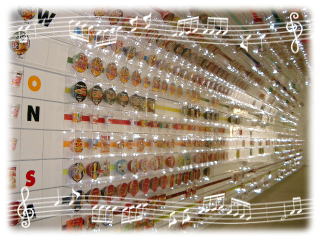
Cup Noodles Museum
Instant ramen was invented by Ando Momofuku, who lived in Osaka.
This museum introduces the history of instant noodles and the ideas behind their creation.
Panasonic Museum
Located in Kadoma City (outside central Osaka), this museum stands near the former headquarters of Panasonic. It highlights the innovative spirit of the company’s founder.
Modern Panasonic products can also be seen at Panasonic Center in LUCUA, next to Osaka Station.
Glico
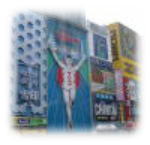 Glico is a well-known snack company famous for products such as Pocky.
Its iconic “running man” logo can be seen on a large neon sign in the Dotonbori area.
Medicines
Osaka has long been a center of the pharmaceutical industry.
The Doshomachi area is known as a “medicine street” and features several exhibition centers operated by pharmaceutical companies.
To learn more about Osaka’s business culture, the Entrepreneurial Museum of Challenge and Innovation is also worth visiting.
Entertainment:
Universal Studios Japan (USJ)
Although it originated in the United States, Universal Studios Japan has been uniquely adapted for Japanese audiences.
Unlike its American counterparts, it features Japanese pop culture, including anime and characters such as Hello Kitty.
Super Nintendo World is one of its most popular attractions.
Bunraku Puppet Theater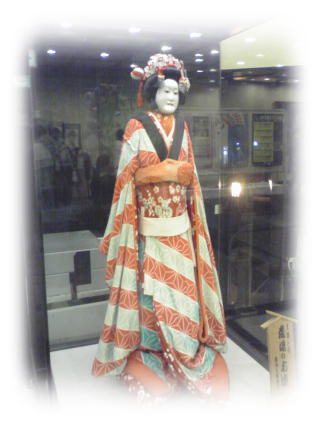
Bunraku may appear to be for children, but its performances deal with serious themes such as tragedy, revenge, suicide, and complex human relationships.
It is designated as a UNESCO Intangible Cultural Heritage.
Large puppets are operated by three performers and accompanied by narration and traditional music.
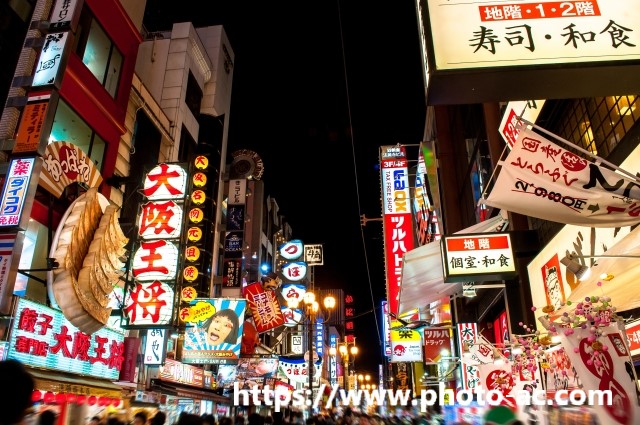 Dotonbori Area
Dotonbori is Osaka’s most famous nightlife district and appears in nearly every guidebook.
However, choosing a restaurant directly on the main street is not always the best option unless it has a long-established history.
Good restaurants can often be found just off the main street.
Observatory: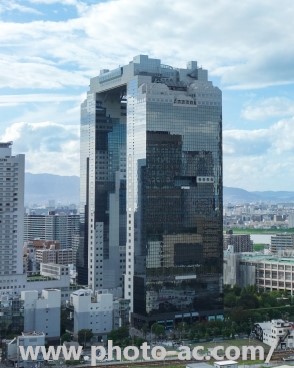
Due to its proximity to Itami Airport, building height restrictions apply to the northern part of Osaka City.
The Umeda Sky Building, standing 173 meters tall, still offers excellent panoramic views.
The tallest building in Osaka is located in the southern part of the city.
HARUKAS 300 rises 300 meters and features an observation deck with sweeping views of the region.
Transportation:
Osaka Metro, the city’s subway system, offers reasonably priced tickets and is a convenient way to explore the city and experience daily life in Osaka.